Monday, September 2, 2013

Labor Day Morning

The History of Labor Day

Labor Day: How it Came About; What it Means

Labor Day, the first Monday in September, is a creation of the labor movement and is dedicated to the social and economic achievements of American workers. It constitutes a yearly national tribute to the contributions workers have made to the strength, prosperity, and well-being of our country.

Labor Day Legislation

Through the years the nation gave increasing emphasis to Labor Day. The first governmental recognition came through municipal ordinances passed during 1885 and 1886. From these, a movement developed to secure state legislation. The first state bill was introduced into the New York legislature, but the first to become law was passed by Oregon on February 21, 1887. During the year four more states — Colorado, Massachusetts, New Jersey, and New York — created the Labor Day holiday by legislative enactment. By the end of the decade Connecticut, Nebraska, and Pennsylvania had followed suit. By 1894, 23 other states had adopted the holiday in honor of workers, and on June 28 of that year, Congress passed an act making the first Monday in September of each year a legal holiday in the District of Columbia and the territories.

Founder of Labor Day

The father of labor day
More than 100 years after the first Labor Day observance, there is still some doubt as to who first proposed the holiday for workers.
Some records show that Peter J. McGuire, general secretary of the Brotherhood of Carpenters and Joiners and a cofounder of the American Federation of Labor, was first in suggesting a day to honor those "who from rude nature have delved and carved all the grandeur we behold."
But Peter McGuire's place in Labor Day history has not gone unchallenged. Many believe that Matthew Maguire, a machinist, not Peter McGuire, founded the holiday. Recent research seems to support the contention that Matthew Maguire, later the secretary of Local 344 of the International Association of Machinists in Paterson, N.J., proposed the holiday in 1882 while serving as secretary of the Central Labor Union in New York. What is clear is that the Central Labor Union adopted a Labor Day proposal and appointed a committee to plan a demonstration and picnic.

The First Labor Day

The first Labor Day holiday was celebrated on Tuesday, September 5, 1882, in New York City, in accordance with the plans of the Central Labor Union. The Central Labor Union held its second Labor Day holiday just a year later, on September 5, 1883.
In 1884 the first Monday in September was selected as the holiday, as originally proposed, and the Central Labor Union urged similar organizations in other cities to follow the example of New York and celebrate a "workingmen's holiday" on that date. The idea spread with the growth of labor organizations, and in 1885 Labor Day was celebrated in many industrial centers of the country.

Sunday, September 1, 2013

Chill Thread

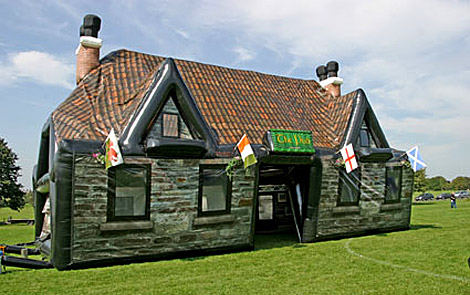
The Liberty Pub is OPEN!

C2 Sunday Morning Above the Fold


Obama leaving door open to Syria strike, even if Congress votes no

President Obama apparently is leaving the door open to moving ahead with a military strike on Syria even if Congress votes against it, adding to the confusion over the president’s evolving position. 
The president, in a surprise decision Saturday, announced he would seek a vote in Congress on launching a military attack against the Assad regime. 
One senior State Department official, though, told Fox News that the president’s goal to take military action will indeed be carried out, regardless of whether Congress votes to approve the use of force. 
Other senior administration officials said Obama is merely leaving the door open to that possibility. They say he would prefer that Congress approve a military attack on the Assad regime, in response to its alleged use of chemical weapons, and will wait to see what Congress does before making any final decisions on authorizing military force.

Obama Grants Amnesty to Illegal Immigrants Without Congress

Congress hasn’t passed immigration legislation, but that hasn’t stopped President Obama from issuing directives that grant amnesty to illegal immigrants. 
Last week, the Obama Administration issued the latest in a line of policy directives granting amnesty by default. This latest directive instructs Immigration and Customs Enforcement (ICE) officials not to enforce immigration laws in cases where an illegal alien is the primary provider for any minor child—regardless of the child’s immigration status—or the parent or guardian of a child who is a U.S. citizen or legal permanent resident. 
In a statement about the new directive, House Judiciary Committee chairman Bob Goodlatte (R–VA) declared
President Obama has once again abused his authority and unilaterally refused to enforce our current immigration laws by directing U.S. Immigration and Customs Enforcement agents to stop removing broad categories of unlawful immigrants.
In June of last year, the Obama Administration’s Department of Homeland Security issued amemorandum telling U.S. immigration officials how they should “enforce the Nation’s immigration laws against certain young people who were brought to this country as children and know only this country as home.” The move essentially served to implement major portions of the DREAM Act—which has been introduced and failed in Congress more than 30 times—by executive fiat.

Four Historians Take On 'The Butler's' Racist Depiction of Reagan

Four Ronald Reagan historians have slammed the portrayal of former President Reagan in the movie "The Butler," saying that the 40th president's "attitudes toward race" as shown in the movie are inaccurate.

They begin the article, "What 'The Butler' gets wrong about Ronald Reagan and race," published in The Washington Post, by recounting instances in Reagan's life when he decried racism and took a stand for the African-American community. 
While serving as president of the Screen Actors Guild, for example, "Ronald Reagan called upon the entertainment industry to provide greater employment for black actors." That position was controversial at the time.

When giving his infamous "evil empire" speech in March 1983 against the Soviet Union, Reagan also attacked the "the resurgence of some hate groups preaching bigotry and prejudice" in America.

These examples came after the historians recount the time when young Reagan brought two African American football teammates home from college to spend the night with his family.

That is hardly the "sense" of Reagan that one gets from the Lee Daniels film the historians explain.

The four historians, who have more than a dozen Reagan biographies between them, are Stephen F. Hayward, whose books include "The Age of Reagan"; Paul Kengor, author of 2007's "The Crusader"; Craig Shirley, who wrote last year's "Rendezvous With Destiny" and the 2005 book "Reagan's Revolution"; and Kiron K. Skinner who has compiled several books on Reagan's life including "Reagan's Path to Victory."

Texas oil output has almost doubled in just the last 2 years and reached a 32-year high in June


The Energy Information Administration (EIA) released new state crude oil production data today for the month of June, and one of the highlights of the monthly update is that oil output in America’s No. 1 oil-producing state – Texas – continues its phenomenal, meteoric rise. Here are some details of oil output in “Saudi Texas” for June: 
1. Texas produced an average of 2.575 million barrels per day (bpd) of crude oil in June, which is the highest average daily output in the state in any month since May 1981, slightly more than 32 years ago (see chart above). Compared to a year earlier, oil output in Texas increased by almost 31% in June, posting the 21st straight month starting in October 2011 that the state’s oil output has increased by more than 30% on a year-over-year basis. 
2. Amazingly, oil production in the Lone Star State has almost doubled in only two years, from 1.4 million bpd in June 2011 to nearly 2.6 million bpd in June 2013, which has to be one of the most significant increases in oil output ever recorded in the history of the US over such a short period of time. A 1.2 million bdp increase in oil output in only two years in one US state is remarkable, and would have never been possible without the revolutionary drilling techniques that just recently started accessing vast oceans of Texas shale oil in the Eagle Ford Shale and Permian Basin oil fields.

Amity Shlaes on Coolidge's life, ideas, and success in bringing about low taxes and small government


Saturday, August 31, 2013

Chill Thread

The Liberty Pub is OPEN!

Mid Afternoon Thread 'cause pBMb said the old one was full!


C2 Bulldog Edition


There are better anti-poverty tools than the minimum wage


Politicians, usually those on the left, frequently propose big hikes in the federal minimum wage — or even a dramatically higher “living wage” — as a way to fight poverty and help low-skill workers. A reasonable sounding idea to many Americans, and one that may be picking up momentum thanks to the glacial recovery in US incomes post-Great Recession. Fast-food workers in 60 US cities went on strike Thursday demanding $15 a hour. That’s twice the current federal minimum and two-thirds higher than the median wage for front-line fast-food workers, according to Reuters.

But raising the minimum wage may not be a policy idea deserving of the passion it generates. It’s not a well-targeted, poverty-fighting weapon. Only 3% of workers age 25 and over earn the minimum wage or less. About half of all minimum wage (or less) workers are age 24 or younger, many of whom presumably live at home with their parents. The 2010 study “Will a $9.50 Federal Minimum Wage Really Help the Working Poor?” by researchers Joseph Sabia and Richard Burkhauser found that a federal minimum wage increase from $7.25 to $9.50 per hour — higher than the $9 that President Obama has proposed — would raise incomes of only 11% of workers who live in poor households.

In a 2012 study, Sabia and Robert Nielsen found ”no statistically significant evidence that a higher minimum wage has helped reduce financial, housing, health, or food insecurity among the poor.” Why? You have to earn a wage to benefit and 55% of poor, less-educated individuals between ages 16 and 64 don’t work. Indeed, nearly 90% of the wage earners who benefited from the 40% increase in the federal minimum wage between 2007 and 2009 were not poor. They lived in households with an income two or three times the poverty level.

Would raising the minimum wage cause job losses? Lots of conflicting studies here. But a 2013 literature review by David Neumark, J.M. Ian Salas, and William Wascher concluded “that the evidence still shows that minimum wages pose a tradeoff of higher wages for some against job losses for others, and that policymakers need to bear this tradeoff in mind when making decisions about increasing the minimum wage.” And research last month from Texas A&M economists Jonathan Meer and Jeremy West find raising minimum wage levels may discourage firms over the long-term from hiring new workers. And that may be particularly true thanks to continuing — even accelerating — advances in automation.

Obama's Rift With Britain On Syria A Dangerous Omen

Syria: The president whose genius was going to talk Islamofascist Iran into submission can't even get America's closest ally to help us bomb a WMD-wielding terror state. You don't follow the ex-leader.

In the aftermath of the British Parliament's stunning refusal to help America attack Syria, ask yourself: would Thatcher have ever refused a Reagan request to help bomb a terrorist regime? Would Blair have refused Bush?

"To renew American leadership in the world, I intend to rebuild the alliances, partnerships, and institutions necessary to confront common threats and enhance common security," candidate Obama wrote in a 2007 Foreign Affairs article marveled at by liberal elites for its sophistication.

Today, the New York Times says if Obama attacks Syria, "he will look more isolated than any president in recent memory entering a conflict."

Keeping allies in our camp was the easy thing; the Obama ego was going to talk the devil himself into becoming a good churchgoer.

"The lesson of the Bush years is that not talking does not work," he claimed in a major foreign policy speech in 2007. "We haven't talked to Iran, and they continue to build their nuclear program. We haven't talked to Syria, and they continue support for terror."

Fast forward to 2013: in the fifth year of the Obama presidency he still hasn't talked to Iran or Syria; he was just humiliated into canceling a Moscow summit. They don't want to talk to Obama; they want to continue to exploit his lack of leadership.

Obama complained that under George W. Bush, "we dismissed European reservations about the wisdom and necessity of the Iraq war." Now his cronies are dismissing not reservations, but outright opposition from most British MPs.

What Is the Objective in Syria?

President Barack Obama said that an introduction of chemical weapons in the Syrian civil war would constitute a "red line" with "enormous consequences" that "would change [his] calculus." That was a year ago. This past March, Obama said, "We will not tolerate the use of chemical weapons against the Syrian people, or the transfer of those weapons to terrorists. ... We will hold [Bashar al-Assad] accountable."

Credible sources -- including Britain, France and U.S. intelligence agencies -- accuse the Syrian government of using chemical weapons on two or more occasions, once last December and possibly twice during March. Obama took no action.

Last week, Secretary of State John Kerry again made an allegation of another use of chemical weapons, this time resulting in the deaths of up to 1,000 men, women and children. "It is undeniable," said Kerry, that the Syrian government has used chemical weapons. Obama officials now say, off-the-record, that a military strike of some sort -- probably cruise missiles -- is just a matter of when.
Let's back up, ask some questions and revisit a few assumptions.

Former Secretary of State and then-Chairman of the Joint Chiefs of Staff Gen. Colin Powell issued the "Powell Doctrine" and received praise from Democrats and Republicans, doves and hawks. Powell set forth several conditions for the commander-in-chief to meet before using the military. A military mission, according to Powell, must first and foremost be vital to our national security. The mission should be clearly defined, have an exit strategy, use overwhelming force to achieve its objective and enjoy popular domestic support.

A military mission in Syria satisfies none of those conditions. Is the objective to topple the regime of Bashar al-Assad? Will firing some missiles accomplish this objective? If not, then what? If so, what comes next? Should the "rebels" succeed, will the new government be any less hostile to the U.S. and treat its people -- especially the opposition -- any better?

Friday, August 30, 2013

Chill Thread

The Liberty Pub is OPEN!

Click image for more beer!

FRIDAY AFTERNOON DRIVE TIME


Friday Morning C2 BYON Thread.


Thursday, August 29, 2013

Temporary Chill Thread

Thursday Evening Pub in Temporary Dig

Welcome to the Temporary Pub. Save great brews and service.


Site redesign and rehosting...

Good afternoon! There have been too many issues with the website, current hosting situation etc that I need to do some redesign work and figure out hosting - too expensive for one thing, and being in the middle of a job search, I need to rehost somewhere cheaper. My apologies. For the next few days we'll have to use this site for now until I get this resolved. Sorry for the inconvenience.